I keep a running list. It started as a notebook scrawl in 2009, the first time I visited Venice with a camera and too much ambition, and it's evolved into something I revise every year or so. These are things I've done repeatedly, things I recommend to friends, and — because honesty matters more than enthusiasm — a few things I think are wildly overrated.
This isn't a ranked list. Venice doesn't work that way. What's perfect on a cold November morning is miserable in August, and the thing you'd skip at twenty-five might be the best part of your trip at forty.
In This Article
- Piazza San Marco before 8am
- Getting lost on purpose
- The Dorsoduro waterfront at dusk
- A proper cicchetti crawl
- Rialto market — but early
- Watching glass being blown on Murano
- The Peggy Guggenheim Collection
- Taking a traghetto across the Grand Canal
- San Giorgio Maggiore bell tower
- Experiencing acqua alta
- Aperitivo at sunset
- A concert in a Vivaldi church
- Walking to the Arsenale
- What I'd skip
1. Piazza San Marco Before 8am
Most visitors see San Marco as a crowded spectacle — pigeons, selfie sticks, a queue snaking around the basilica, someone selling knockoff bags on a blanket. That version of the piazza exists from roughly 9am until midnight.
But at 7am? Different place entirely.
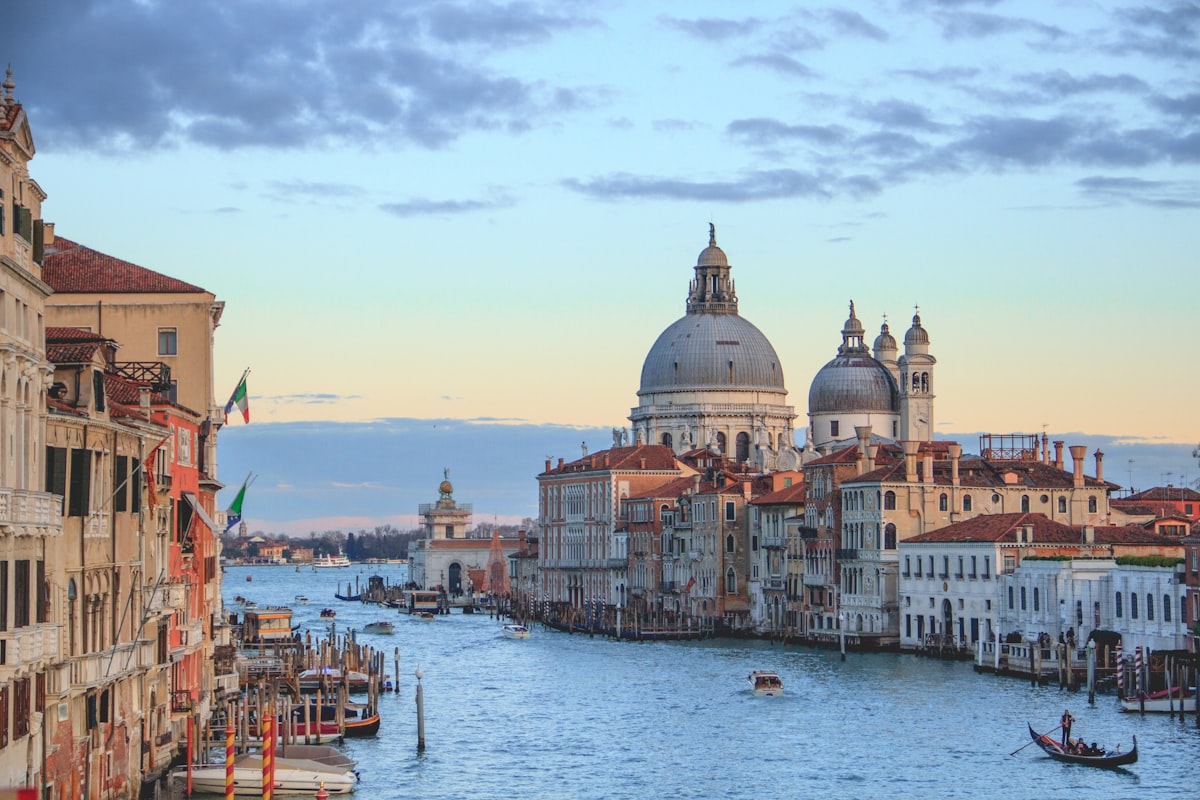
I've photographed the piazza in every season and every light condition I can manage, and those early mornings remain my favourite frames. The stone picks up this warm pinkish tone before the sun clears the rooftops. The arcades are empty. Sometimes a café is setting up chairs, the legs scraping on stone in the quiet. There's a particular echo to footsteps in the piazza when nobody else is there — it bounces off the Procuratie and returns to you slightly altered, slightly softer.
Set an alarm. Walk there. Bring a coffee from your hotel if you can manage it. Stand in the middle of the piazza and just look up.
2. Getting Lost on Purpose
This sounds like advice from a greeting card, but I mean it literally.
Put your phone in your pocket, pick a direction, and walk. Venice is small enough that you can't get dangerously lost — you'll always hit water eventually, and the yellow Per San Marco and Per Rialto signs will reorient you whenever you want them to. The point isn't to find something specific. The point is to stumble across a courtyard you'd never have sought out, a door that's been painted that particular shade of Venetian green for two hundred years, a cat asleep on a windowsill above a canal so narrow you could touch both walls.
My best photographs — the ones that actually sell — have come from walks where I had no idea where I was going. The planned shots look planned. The discovered ones look alive.
3. The Dorsoduro Waterfront at Dusk
Walk along the Zattere, the long south-facing waterfront in Dorsoduro, sometime around an hour before sunset. Across the Giudecca Canal, the church of the Redentore catches the last light. Students from the nearby university sit on the fondamenta with bottles of wine. Runners go past. Old couples walk slowly.
There's a gelateria — Nico — that's been there since 1935. Order a gianduiotto (a chunk of frozen chocolate hazelnut, half-submerged in whipped cream) and sit on the wall with your legs dangling toward the water. I've probably done this fifty times. It hasn't got old.
4. A Cicchetti Crawl Through San Polo
I've written about this in more detail separately, but it belongs on any list of things to do in Venice because it's less about the food (though the food is excellent) and more about the ritual.
You start at one bacaro, order two or three small plates and a glass of wine, stand at the bar, eat, move on. Repeat. Three or four stops and you've had dinner — a better dinner than most sit-down restaurants will give you, at a third of the price, and you've experienced something genuinely Venetian rather than something designed for visitors.
The best cicchetti crawl I ever did was in January, in the rain. Four of us, five stops, three hours. Nobody was sober by stop four. Nobody cared about the rain by stop two.
5. Rialto Market — But You Have to Go Early
The Rialto fish market (Pescheria) has been operating on the same spot since 1097. Let that sit for a moment. Nearly a thousand years of fishmongers standing in roughly the same place, selling roughly the same things from the same lagoon.
Go before 9am. The fish stalls are under the covered loggia on the Grand Canal side — heaps of moeche (soft-shell crabs, in season), octopus, squid, clams, fish I still can't identify. The vegetable market is adjacent and equally photogenic. By 11am, the good stuff is gone and the stalls are packing up.
Closed Sundays and Mondays. I've walked there on a Monday three separate times because I apparently can't retain this information.
6. Watching Glass Being Blown on Murano
Murano gets a bad reputation because of the glass factory tours — the ones where someone on the street offers a "free boat ride" that deposits you in a showroom where you're expected to buy a €200 chandelier. Skip those.
Instead, walk around the island (it's small, takes about an hour) and look for the fornaci where you can see actual glassblowers working. Some charge a few euros for a demonstration, and it's worth it. Watching someone shape molten glass at 1,000°C with a pair of tweezers and a puff of air is genuinely mesmerising. The skill is medieval and the heat is ferocious — the glassblowers break for water constantly and their forearms look like leather.
7. The Peggy Guggenheim Collection
A personal collection of modern art housed in an unfinished palazzo on the Grand Canal. Picasso, Pollock, Ernst, Dalí, Magritte — the usual suspects, but presented in a way that feels intimate rather than institutional. Peggy lived here. Her dogs are buried in the garden. The Marino Marini sculpture on the terrace has a detachable appendage that Peggy allegedly pointed toward the Grand Canal when the nuns across the water complained.
I go roughly once a year. It takes about ninety minutes. The garden is a good place to sit afterwards and wonder about the kind of person who collects a Calder mobile and hangs it in their dining room.
8. Taking a Traghetto Across the Grand Canal
There are only four bridges across the Grand Canal. For everything in between, there are traghetti — large gondolas that ferry passengers from one bank to the other for €2. You stand up. Locals stand up, at least. Tourists tend to sit, which is fine but marks you immediately.
The crossing takes about ninety seconds. It's the cheapest gondola ride in Venice and, honestly, the most authentic one. Nobody sings. Nobody wears a striped shirt. You just cross the canal standing in a boat, like Venetians have been doing for centuries.
9. Climbing San Giorgio Maggiore's Bell Tower
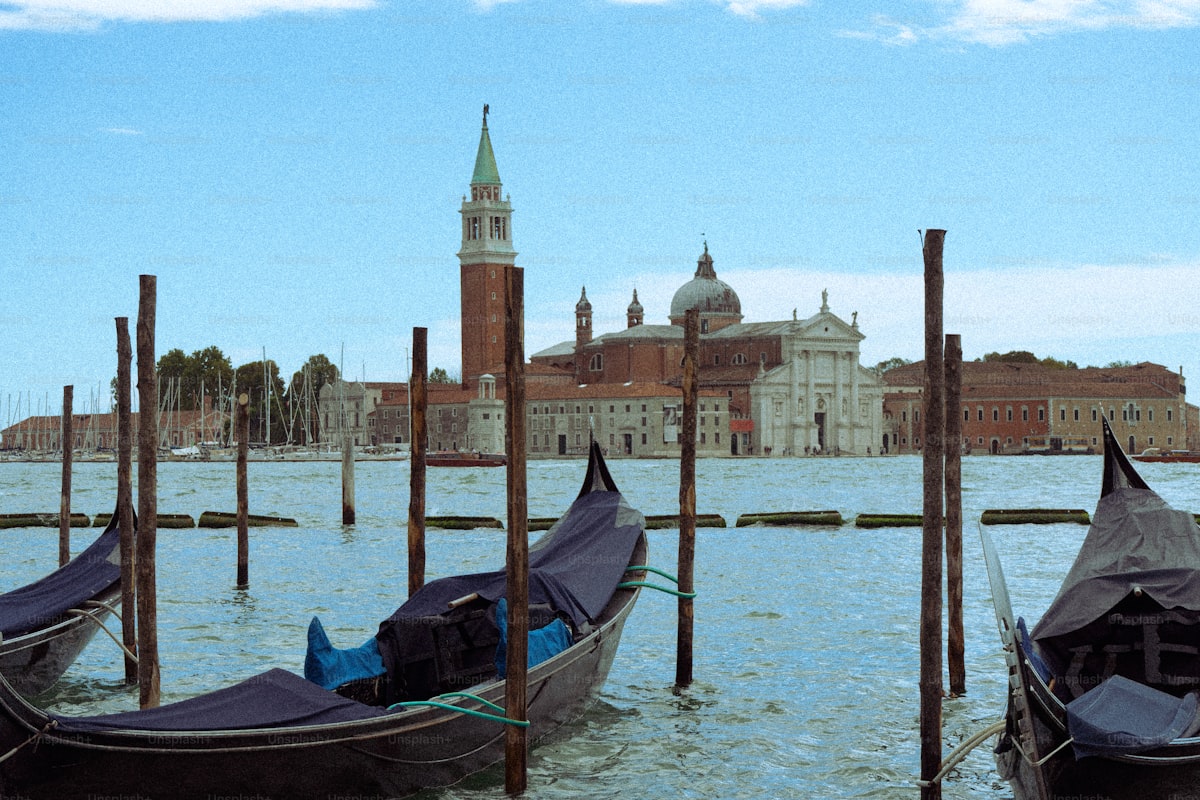
Everyone queues for the Campanile in San Marco. Almost nobody takes the vaporetto to San Giorgio Maggiore island and rides the lift to the top of its bell tower instead.
The view is better. I'll say it plainly: it's better. From San Giorgio you see the entire sweep of Venice laid out across the water — San Marco, the Doge's Palace, the rooftops of Dorsoduro, the curve of the Grand Canal, the lagoon stretching to the horizon. From the San Marco Campanile, you see... Venice minus the one thing that makes the San Marco skyline iconic, which is the Campanile itself.
Cost is €6 for the lift. The queue is rarely more than five minutes. Palladio's church downstairs is worth a look too — spare, white, mathematically precise in a way that feels almost modern.
10. Experiencing Acqua Alta (If You're Lucky)
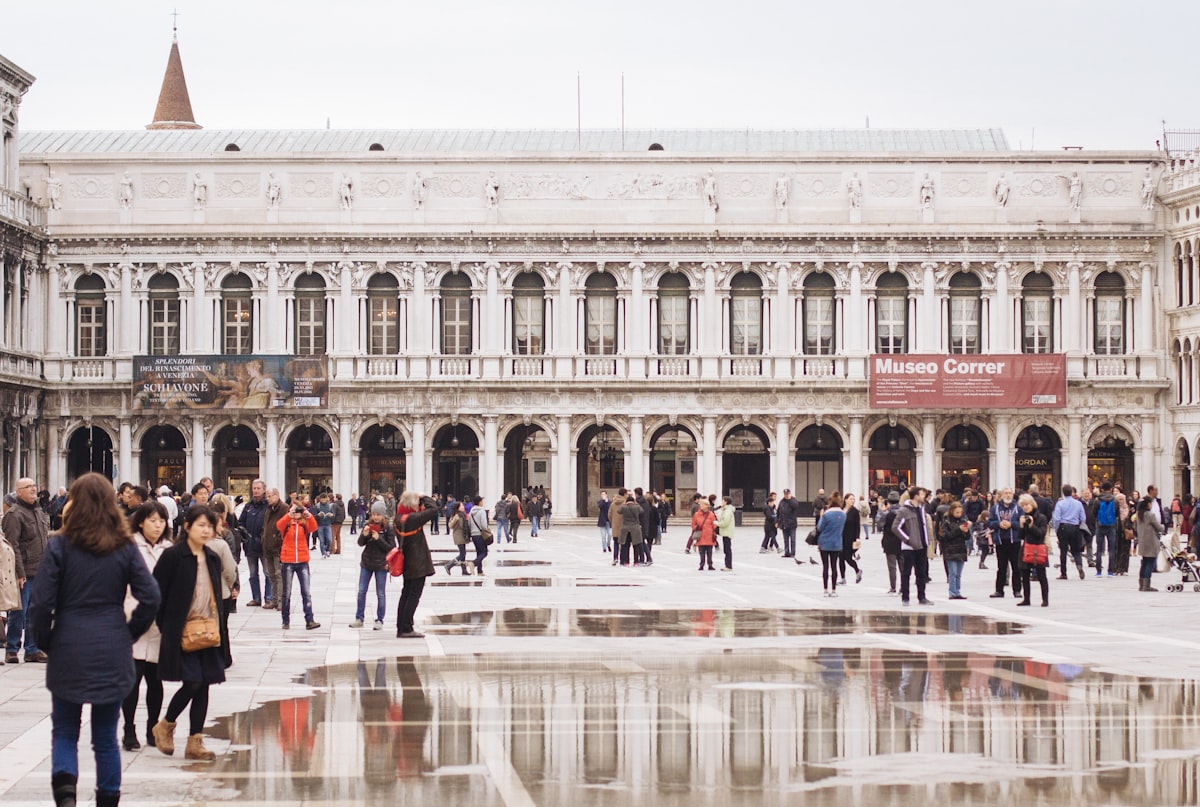
Acqua alta — the periodic flooding that turns San Marco into a shallow lake — is Venice's most photogenic inconvenience. It happens mostly between October and January, and it's caused by a combination of tides, wind, and atmospheric pressure. The city has been dealing with it for centuries. Raised walkways (passerelle) appear within hours. Shopkeepers raise their stock onto higher shelves with practiced calm.
If you're in Venice when the sirens sound (they use a system of rising tones to indicate severity), put on waterproof shoes and go to San Marco. Watching the piazza flood — the water creeping across the stone, the reflections doubling the basilica, people wading through in rubber boots — is strange and beautiful and slightly apocalyptic. It makes you understand, viscerally, that this city exists in an argument with the sea that it has been slowly losing.
11. Aperitivo at Sunset, Anywhere Facing West
The Venetian spritz — Aperol or Select, prosecco, a splash of soda, an olive — costs between €3 and €8 depending on where you drink it. The range tells you everything about Venice's economy. The €3 spritz at a bar in Cannaregio where the bartender knows everyone by name is the same drink as the €8 one in a San Marco piazza with a view of the basilica. You're paying for the chair and the postcard.
My preference: find any bar with a canal-facing table on the west side of the city and arrive around 6pm in summer, 4:30pm in winter. The light turns gold. The water turns gold. Your spritz turns gold, because it already was. Everything aligns for about twenty minutes and then it's over and you go find dinner.
12. A Concert Where Vivaldi Actually Played
Vivaldi was Venetian. He taught music at the Ospedale della Pietà, a few minutes' walk from San Marco, and composed most of his work here. The church of Santa Maria della Pietà — also called the Vivaldi Church — still hosts concerts of his music, performed by musicians in period costume with period instruments.
Is it touristy? Yes. Is it also genuinely moving to hear the Four Seasons played in the room where it was conceived, with the lagoon visible through the windows? Also yes. The acoustics are remarkable. Tickets run €25–35 and can be bought at the door or from the usual travel sites. I'd recommend the evening concerts — the candlelight adds something that afternoon performances lack.
13. Walking East to the Arsenale
Most visitors stick to the San Marco–Rialto–Accademia triangle. Understandable. But if you walk east from San Marco, past the Riva degli Schiavoni, through Castello, you'll reach the Arsenale — Venice's old naval shipyard, where the republic built the fleet that dominated the Mediterranean for centuries.
The twin towers at the entrance are magnificent. The stone lions flanking the gate were looted from Piraeus in 1687. During the Biennale (odd-numbered years, roughly June to November), the interior spaces host exhibitions. Even outside the Biennale, the walk is worth it — Castello is quiet, residential, full of laundry hanging between buildings and cats sitting in doorways. It's the Venice that most tourists never reach, which is precisely why you should.
And Now: A Few Things I'd Skip
I'll get emails about this section. That's fine.
Feeding the pigeons in San Marco. There was a time when this was a standard tourist ritual — buy a bag of corn from a vendor, stand in the piazza, let birds land on your arms. It's been banned since 2008 for public health reasons, and rightly so. Those pigeons carry diseases. The vendors who still try to sell you corn are doing it illegally. Don't.
A gondola ride from the San Marco waterfront. Not all gondola rides — just the ones where gondoliers stand in a row near the Doge's Palace and charge €80-120 for thirty minutes of floating through crowded channels while someone behind you in another gondola holds a GoPro on a stick. If you want a gondola, book one for early evening from a quieter station in Dorsoduro or San Polo. Same price, half the traffic, twice the atmosphere.
| Activity | Tourist Version | Better Alternative |
|---|---|---|
| Gondola ride | San Marco waterfront, midday, crowds | Dorsoduro station, early evening, quiet canals |
| Glass shopping | "Free boat" factory tour with sales pressure | Walk Murano independently, visit Museo del Vetro |
| Piazza San Marco | Midday with 10,000 others | 7am, nearly empty, extraordinary light |
| Bell tower view | San Marco Campanile, long queue | San Giorgio Maggiore, better view, no queue |
Hard Rock Cafe Venice. It exists. I have nothing else to say about this.
Venice rewards attention, patience, and a willingness to turn left when the sign says right. It punishes rushing. Thirty trips in and I still find things I haven't seen before — a courtyard I missed, a reflection I hadn't noticed, a bar I hadn't tried. The city is old and slow and strange, and the best thing you can do in it is slow down until your pace matches its own.